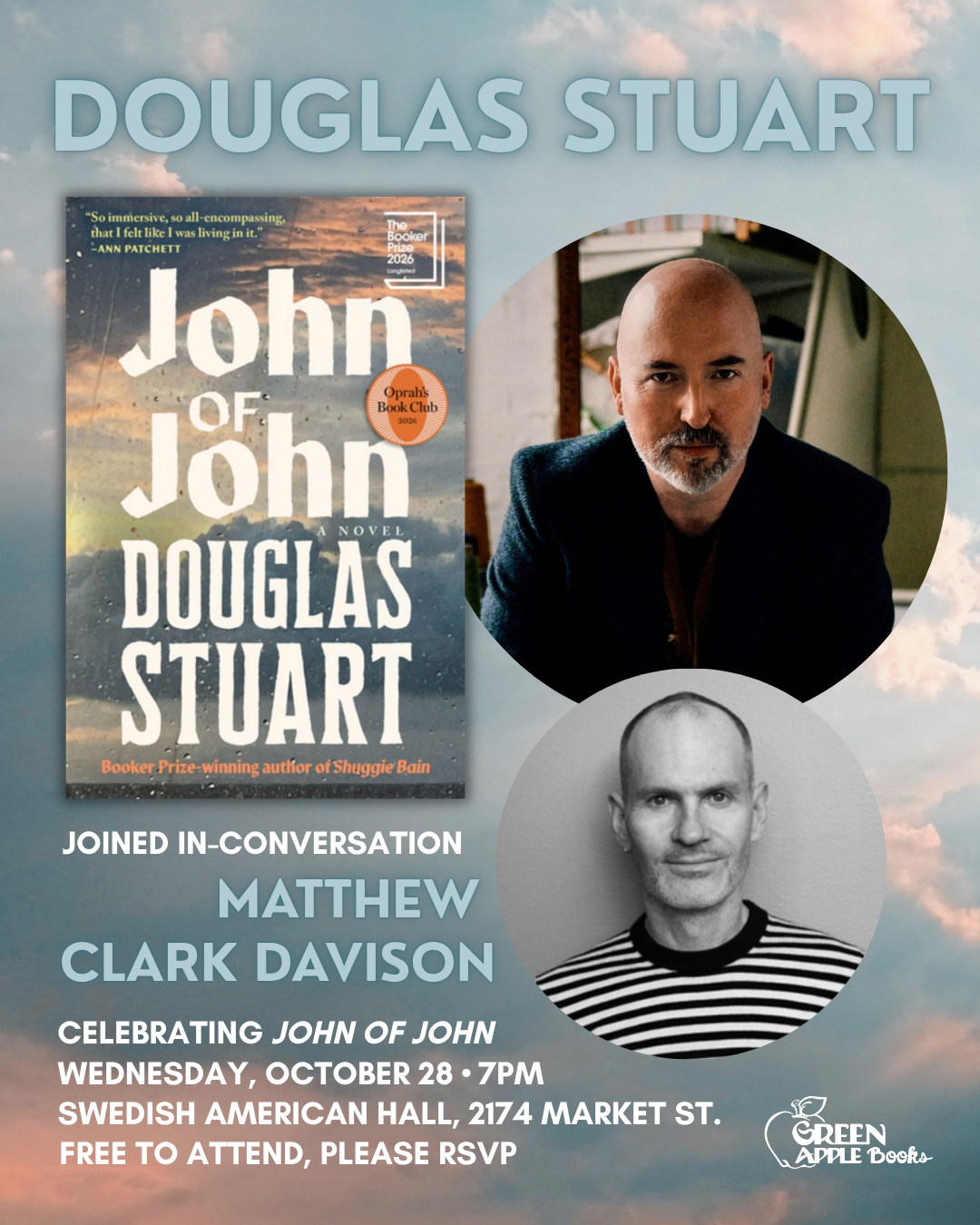
Join us on Wednesday, October 28 at 7pm when we welcome Douglas Stuart to celebrate his novel, John of John, with Matthew Clark Davison
Swedish American Hall, 2174 Market St, San Francisco, CA
General ticket is free. Donation to Green Apple Books $5/person.
Join us for an evening with Booker Prize-winning author Douglas Stuart as he discusses John of John, his vivid new novel set on the Isle of Harris in the Outer Hebrides.
Free to Attend, Please RSVP
Or Watch on YouTube Live/Link Available Soon
Praise for John of John
“This excavation of family, violence and shame is woven through with beautiful imagistic detail, and—unexpectedly—shades of hope. We loved the rich, textural detail of the story.”—The Booker Prize 2026 judges
“John of John is another mesmeric, transportive, vividly sensory and astonishingly textured novel from one of our greatest writers.”—Bernardine Evaristo
“Like Marilynne Robinson’s Gilead, Douglas Stuart explores the visible and invisible chains of love forged between a parent and child — as each grapples with his respective faith and complex humanity. Stuart’s characters yearn and yield tenderly as they struggle with fate and free will. The inimitable world of John of John is passionate, liberating, and gorgeous.“—Min Jin Lee
“Douglas Stuart’s John of John has the emotional range and sense of sympathy of his earlier books, but this book is special, it has an urgency, an immediacy, a brilliant sense of place, the drama of fierce emotion repressed, concealed and volcanically exposed.”—Colm Tóibín
About John of John
LONGLISTED FOR THE BOOKER PRIZE • AN OPRAH’S BOOK CLUB PICK • AN INSTANT NEW YORK TIMES BESTSELLER
From the Booker Prize-winning and New York Times bestselling author of Shuggie Bain and Young Mungo comes a vivid, moving novel following a young man returning to his Hebridean island home, a portrait of a father’s expectations and a son’s desires
Out of money and with little to show for his art school education, John-Calum Macleod takes the ferry back home to the Isle of Harris in the Outer Hebrides to find that little has changed except for him. He returns to the windswept croft and the two pillars of his childhood: his father John, a sheep farmer, tweed weaver, and lay preacher in the local Presbyterian church, and his maternal grandmother Ella, a profanity-loving Glaswegian whose steady warmth helped Cal weather the sudden departure of his mother.
Cal privately wonders if any lonely men might be found on the barren hillsides of home, while John is dismayed by his son’s long hair, strange clothes, and seeming unwillingness to be Saved. But Cal isn’t the only one in the croft house who is keeping secrets. As lambing season turns to shearing season, the threads holding together the community together become increasingly frayed, and nothing will remain as it was before.
John of John is a singular novel about duty, passion, and the transformative power of the truth. It is a magnificent literary work that cements Douglas Stuart’s reputation as one of our greatest novelists working today.
About Douglas Stuart
Douglas Stuart is a Scottish-American author. His New York Timesbestselling debut novel Shuggie Bain won prizes including the 2020 Booker Prize and the Sue Kaufman Prize from the American Academy of Arts and Letters, was a finalist for the National Book Award and the PEN/Hemingway Award, and was named one of the “25 Best Books of the 21st Century” by the Sunday Times (UK). His second novel, Young Mungo, was a national bestseller, longlisted for the Andrew Carnegie Medal and a finalist for the British Book Award, and one of the most highly acclaimed books of the year. His stories are published in The New Yorker and his essays have featured on Literary Hub. He lives in New York City.
About Matthew Clark Davison
Matthew Clark Davison is co-author (with bestselling writer Alice LaPlante), of The Lab: Experiments in Writing Across Genre (W.W. Norton ’25) and author of the novel Doubting Thomas (Amble Press ’21), which was hailed as one of “46 Must-Read Books by Queer Authors” in Esquire Magazine. Find out more about his writing and teaching by following him on Instagram and Substack.
Accessibility
The event is located on the ground level, and there are no stairs between the entrance and event space.
We no longer require face masks in our store, but surgical masks are available for attendees.



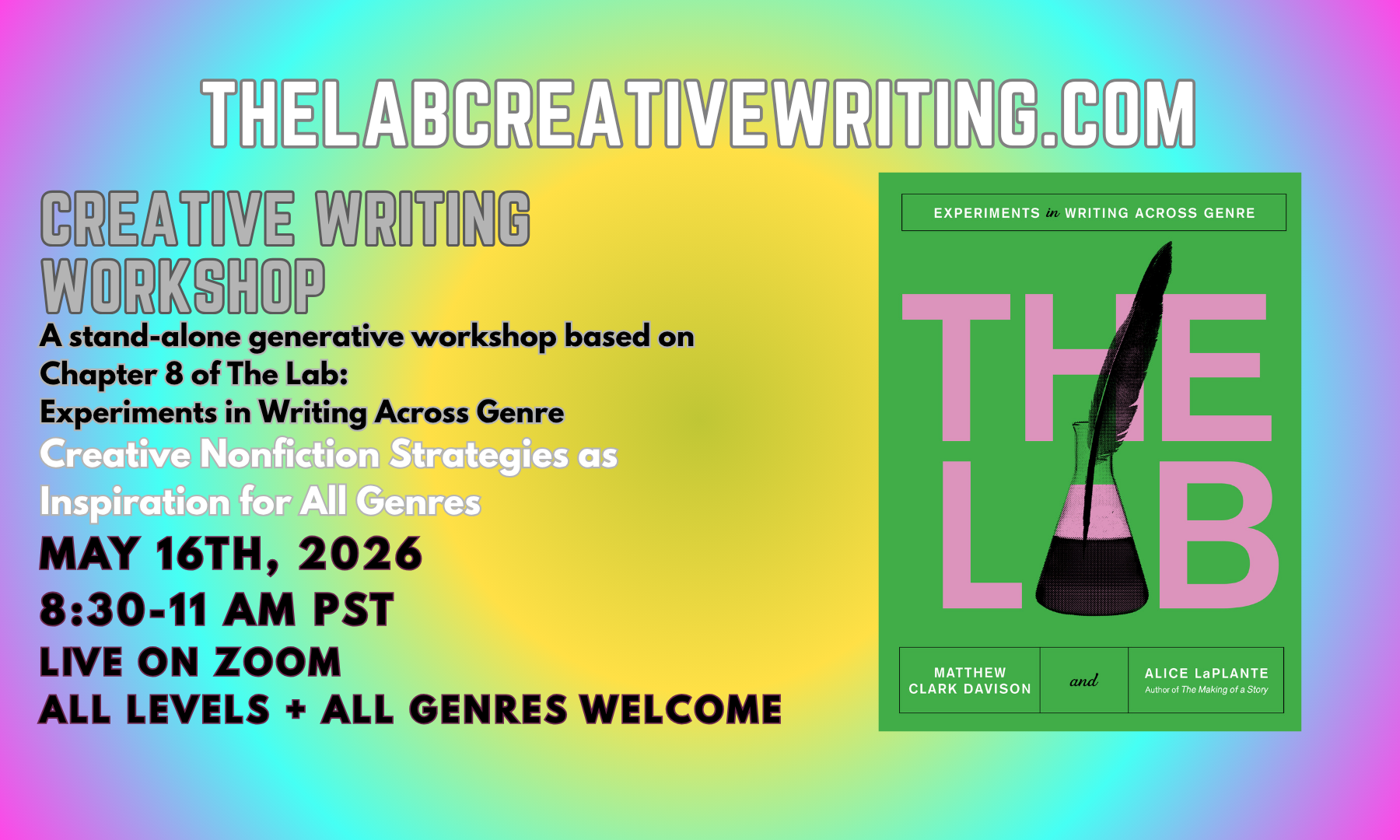
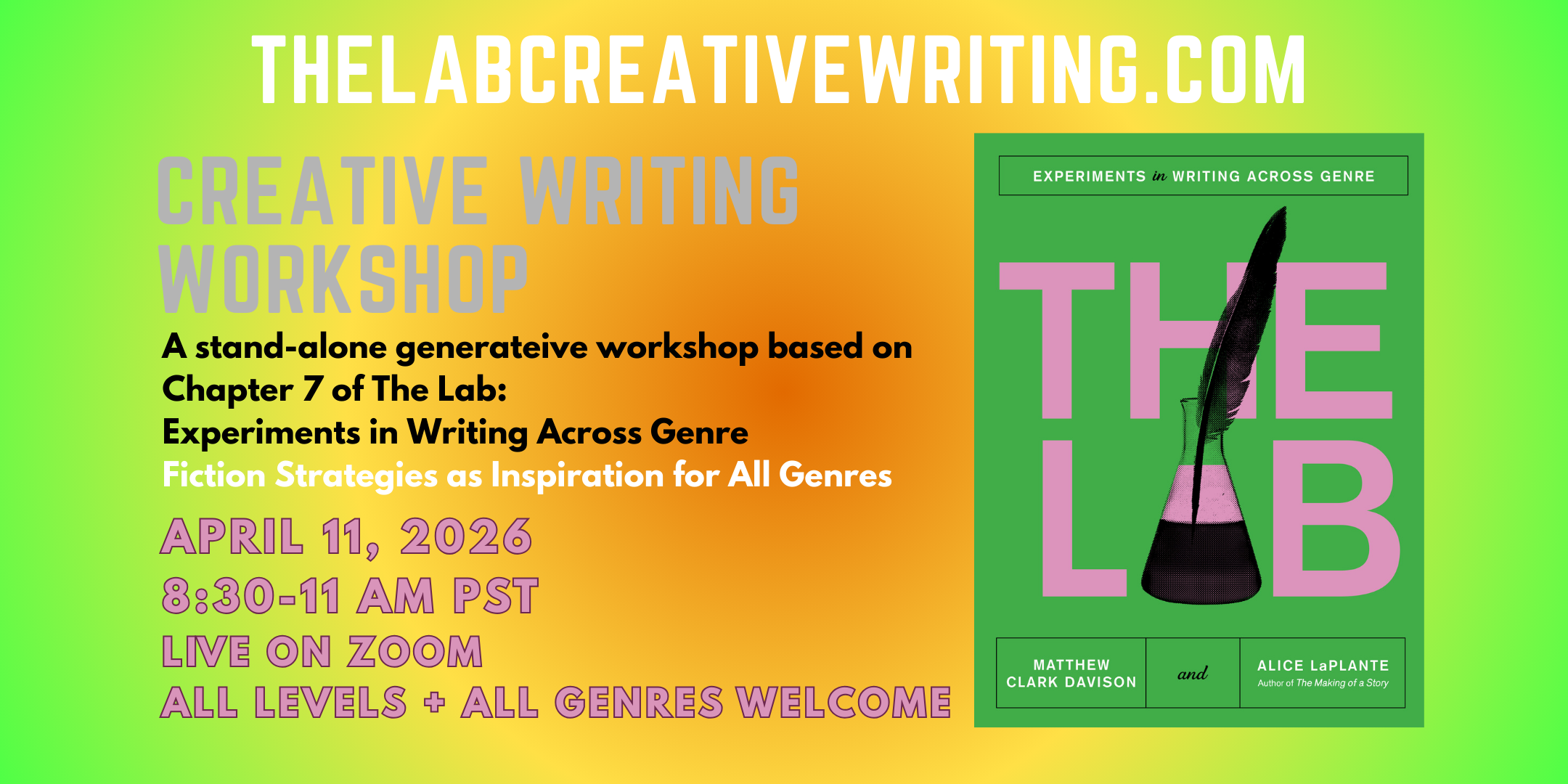
Creative writing workshops have been at the center of my work with Alice since we published The Lab: Experiments in Writing Across Genre (W.W. Norton, 2025). The Lab offers prompts, craft essays, and a process-based approach to writing that helps writers reconnect with their passions and obsessions, deepen the aesthetics of works-in-progress, and discover the meaning and shape of their narratives. The creative writing workshops that grew out of the book follow the same approach: writers of all levels and genres working together to write new pages, deepen existing work, and stay with what has emotional heat.
A Year of Creative Writing Workshops: From Mallorca to AWP and Beyond

Since the week-long generative writing retreat in Mallorca last June, I have (often with Alice) offered roughly 30 events for writers across the country and online. The retreat brought together a small group of writers for a week of intensive creative writing workshops. In Mallorca we were joined by Jill Bialosky, Executive Editor and Vice President at W.W. Norton, and Victoria Skurnick of Levine Greenberg Rostan Literary Agency. What a thrill!
During AWP week, Alice and I along with a brilliant panel, including former “Labbers” participated in a panel based on The Lab, and Alice and I also gave a talk at the Enoch Pratt Free Library in Baltimore, one of the oldest and most celebrated free public library systems in the United States. https://www.prattlibrary.org.
Live readings and workshops followed at bookstores including Booksmith in San Francisco, Elliott Bay Book Company in Seattle, Bloomsbury Books in Ashland, Oregon, and Bookends and Beginnings in Evanston, Illinois.
There were also appearances at the SF Main Library’s Grotto Nights, a free public workshop in Las Vegas supported through Black Mountain Institute’s Community Partnership, and events at the 23rd Annual Saints and Sinners LGBTQ+ Literary Festival.
Online Creative Writing Workshops on Zoom

Alongside the in-person events, Alice and I ran an ongoing 10-class-series of online creative writing workshops via Zoom, each one tied to a chapter of The Lab. These creative writing workshops covered fiction, creative nonfiction, hybrid forms, and revision. I also started a close reading series called “Reading as Writers,” with sessions focused on stories by Denis Johnson and Ann Pancake.
All of our Zoom creative writing workshops are also open to writers of all levels and genres. No preparation is required. Many participants returned for multiple sessions, working through the chapters of The Lab in sequence.
Each class is live and generative: writers are writing during the session, not just listening. The format includes craft talk, guided prompts, and short bursts of writing.
The book behind the workshops, The Lab: Experiments in Writing Across Genre, has ten chapters and ninety exercises and is published by W.W. Norton. It is available through the publisher, through independent bookstores.
What to Expect from The Lab’s Creative Writing Workshops
The creative writing workshops offered through The Lab are rooted in the idea that writers learn best by writing, by reading closely, and by being in conversation with others who take the work seriously.
Whether online or in person, each session draws from The Lab’s exercises and prompts. Writers are encouraged to bring a notebook or a charged laptop and to be ready to write.
The Reading as Writers sessions ask not just what a story is doing but how it is doing it. Writers are encouraged to annotate, take notes, and write during the class. It is not a workshop in the traditional feedback sense. It is a chance to practice a way of reading that can sharpen your own writing.
Fall Creative Writing Workshops: Stay Tuned
More creative writing workshops and events are being planned for the fall. We might even have a few surprises this summer! Details will be shared here and by newsletter when they are ready. If you attended any of the events listed on this page, thank you. It has been a full and rewarding year of work.
To be notified about upcoming creative writing workshops, sign up for the newsletter at thelabcreativewriting.com.
Meanwhile, follow us!


Word nerds of all levels who work in all genres. You can write poems, scenes, memoir, short prose, or hybrid work in response to the prompts. The goal is not to follow a set of rules. The goal is to leave with new material and a clearer sense of craft choices you can repeat: when to render, when to compress, and when an abstraction is the more powerful move because you have made the reader feel its truth.
Pricing
Single session: $85
3-session bundle: $225 (save $30) — choose any three workshops
Upcoming Workshops in the Series:All workshops run 8:30–11:00 am PT
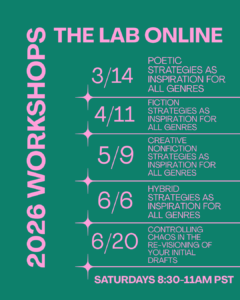
May 9, 2026 – Chapter 8: Creative Nonfiction Strategies as Inspiration for All Genres
Jun 6, 2026 – Chapter 9: Hybrid Strategies as Inspiration for All Genres
Jun 20, 2026 – Chapter 10: Controlling Chaos in the Re-Visioning of Your Initial Drafts
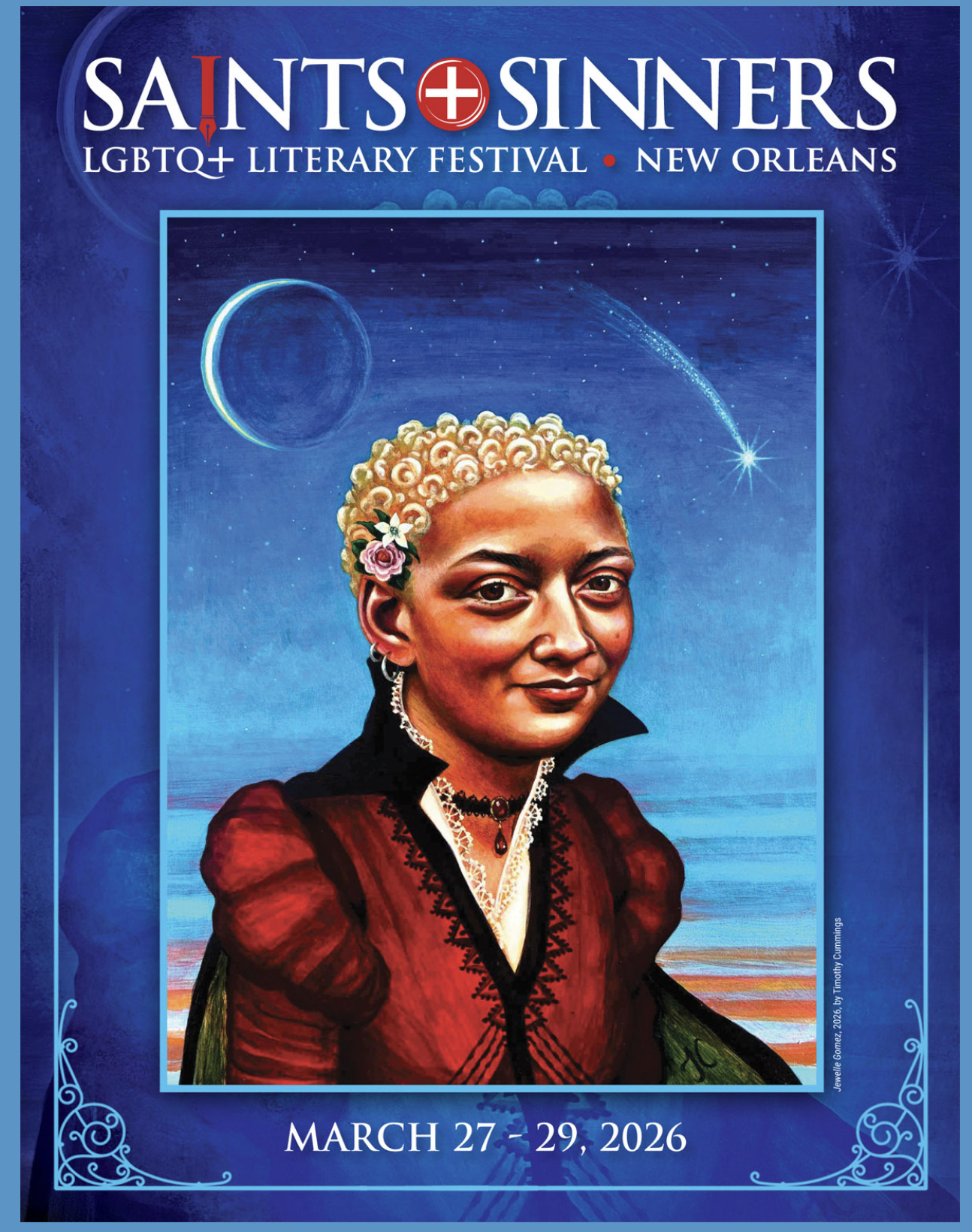
See You In New Orleans!
Friday, March 27th
Saturday, March 28th
2:30 – 3:45 PM—Reading Series
SAINTS AND SINNERS: WRITERS READ
Sponsored by the John Burton Harter Foundation
Take the rare opportunity to hear authors in their own voice. This highlighted Festival event has authors share their vivid imaginations with their new creations, or revisiting a past work that holds special meaning. Please join us in welcoming: Gaar Adams, Elizabeth Costello, Matthew Clark Davison, Mickie Kennedy, Martin Padgett, Robert Raasch, and K.M. Soehnleinfor this year’s mix of established and exciting new writers.
Hotel Monteleone, Lobby Level, Royal D
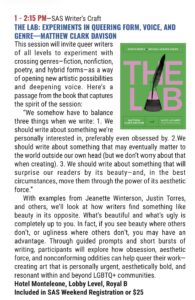
Saturday, March 28th

11:30 – 12:45 PM—Literary Discussion
CONTROLLED CHAOS: FINDING FORM THROUGH REVISION
How does one bring an initial idea/impulse/sketch to final draft? How do various writers draft and redraft until the piece can deliver those “units of satisfaction” to a reader. This panel talks about their views of revision: is it a balance between control and creativity? When do you honor the “nonconforming oddities” and put them to the test? When do you expand—following what’s interesting, surprising, and worthy of exploration? When do you contract—cutting what isn’t earning its keep, tightening focus, and improving pacing? The panelists will talk about how they re-see a draft again and again, how they decide what belongs, and how they know when it’s time to let the work go. Moderated by novelist and co-author of the craft book The Lab: Experiments in Writing Across Genre, Matthew Clark Davison.
Panelists: Michael Cunningham, Cammie McGovern , Timothy Schaffert, and Robert Olen Butler
Moderator: Matthew Clark Davison of The Lab Creative Writing.
I wrote more about this upcoming set of events here.
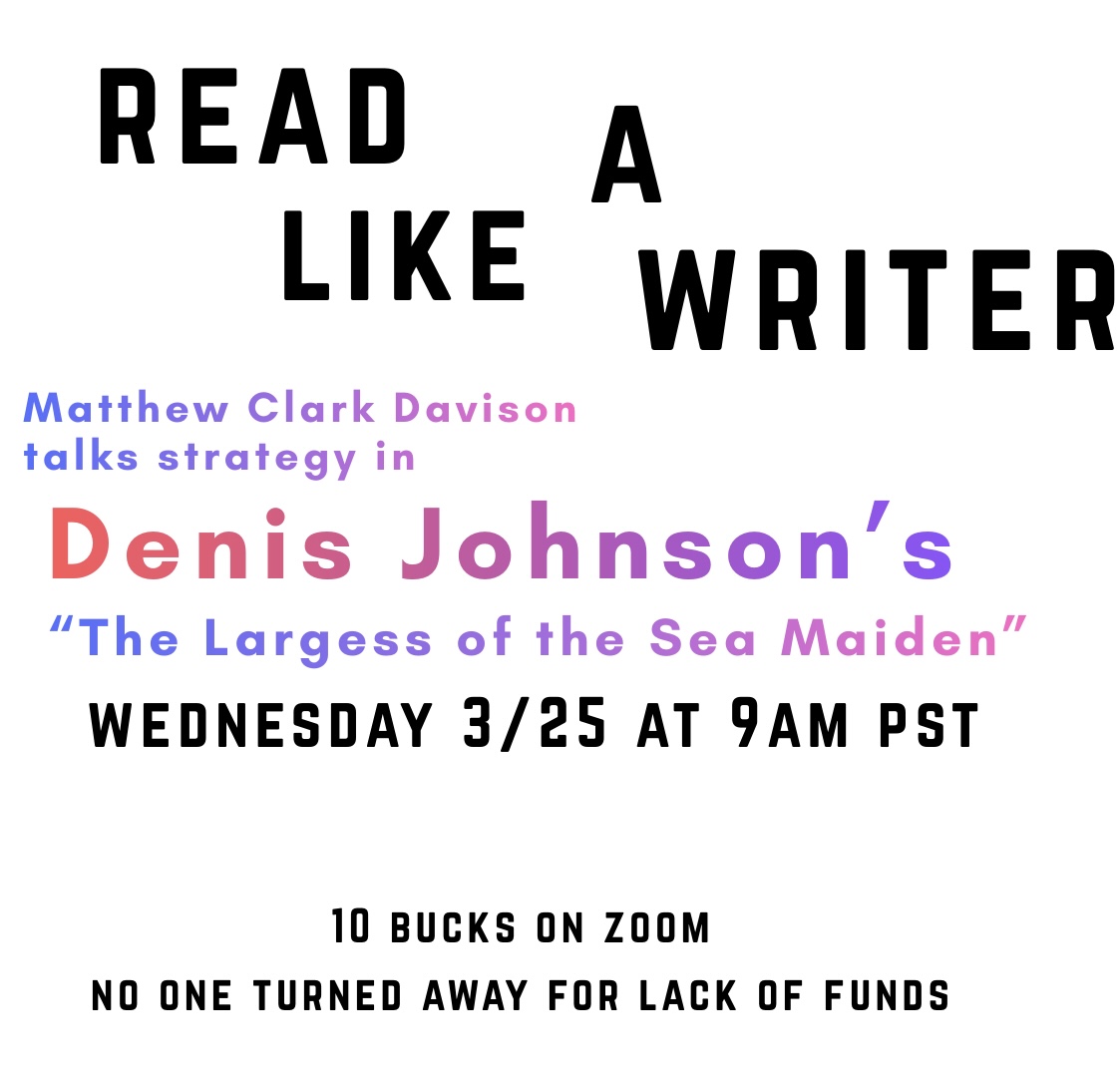
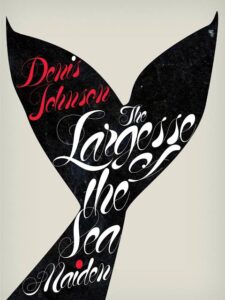
A 90-minute interactive online class on Denis Johnson’s “The Largess of the Sea Maiden” and the skills writers can build by reading closely, actively, and as artists.
What can writers learn from the stories that move, jar, and excite them?
This 90-minute online class will focus on Denis Johnson’s short story “The Largess of the Sea Maiden,” while also offering a broader way of reading that writers can bring to any work they care about deeply.
The class grows out of a central ethos of The Lab: Experiments in Writing Across Genre: that reading can be an active creative practice. When a story affects us, we can ask not only what it is doing, but how it is doing it. We can notice structure, tonal shifts, patterns, pressure, surprise, strangeness, withholding, emotional movement, and sentence-level choices. We can read with our own work in mind.
This will be an interactive session. Participants will be encouraged to take notes, annotate the story, and do brief bursts of writing during the class. No one will be asked to share work or receive feedback. This is not a workshop. It is a chance to practice a way of reading that can deepen your writing.
The fee for this class is $10, plus Eventbrite fees. The small charge is meant to create a bit of commitment around showing up, while keeping the class accessible. No one interested will be turned away for lack of funds.
I hope this will be the first in a series.
Date and time
Wednesday, March 25, 2026
9:00 AM–10:30 AM PST
Poetry :: The exact rendering of an ambiguity
About the Workshop
What makes a poem a poem? People have tried to answer this with rules about line breaks, meter, rhyme, or intent. Those answers can be interesting, but they do not help much when you are trying to revise a piece of writing so it feels sharper, stranger, and more alive.
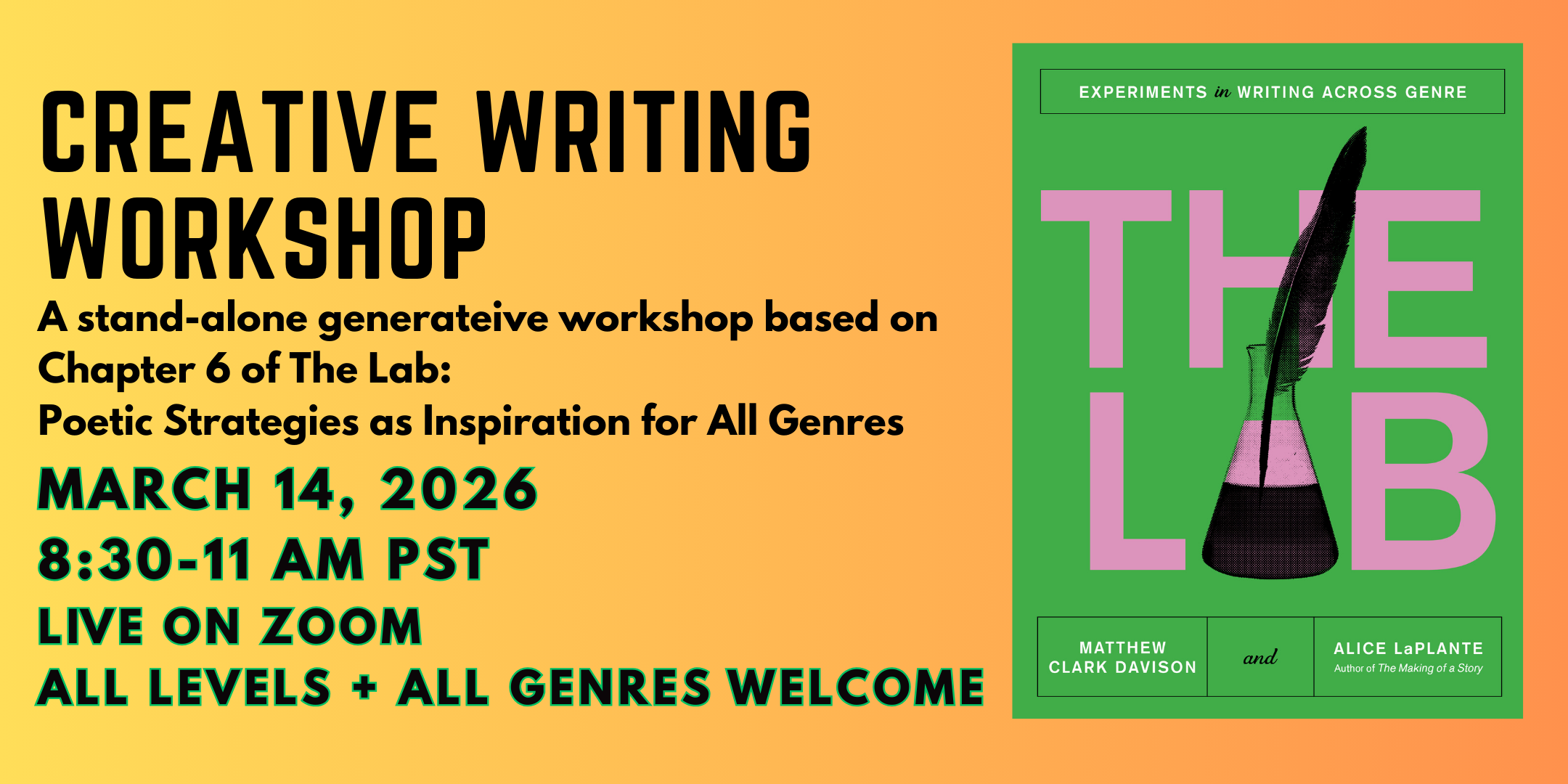
This generative workshop is based on Chapter 6 (“Poetry”) of The Lab: Experiments in Writing Across Genre (W.W. Norton, co-authored by Matthew Clark Davison and Alice LaPlante). We will start with a basic guideline that many writers return to: writing that works tends to operate through the senses. Flannery O’Connor put it plainly: fiction “deals with reality through what can be seen, heard, smelt, tasted, and touched.” We will use that as a useful baseline, not a law.
We will also talk about abstraction. Abstractions are not “bad.” They are often the point. The question is when an abstraction has been earned, and when it is standing in for the harder work of rendering. In practice, an earned abstraction usually has something solid underneath it: a specific image, a precise moment, a pressure of sound or syntax, or a sequence of details that makes the abstract claim feel inevitable rather than generic.
Through guided prompts and short bursts of writing, we will work on:
- choosing images that can carry emotional weight without explanation
- using literal and figurative language deliberately, including when to avoid metaphor and when to lean into it
- testing how line breaks change pace, emphasis, and tension (including turning prose into verse and verse into prose)
- paying attention to rhythm and sound as part of meaning, not decoration
- trying “friendly constraints” that force new decisions and reveal new material
You can write poems, scenes, memoir, short prose, or hybrid work in response to the prompts. The goal is not to follow a set of rules. The goal is to leave with new material and a clearer sense of craft choices you can repeat: when to render, when to compress, and when an abstraction is the more powerful move because you have made the reader feel its truth.
***
Pricing
Single session: $85
3-session bundle: $225 (save $30) — choose any three workshops
5-session bundle: $350 (save $75) — choose all five
Upcoming Workshops in the Series:All workshops run 8:30–11:00 am PT
Mar 14, 2026 – Chapter 6: Poetic Strategies as Inspiration for All Genres
Apr 11, 2026 – Chapter 7: Fiction Strategies as Inspiration for All Genres
May 9, 2026 – Chapter 8: Creative Nonfiction Strategies as Inspiration for All Genres
Jun 6, 2026 – Chapter 9: Hybrid Strategies as Inspiration for All Genres
Jun 20, 2026 – Chapter 10: Controlling Chaos in the Re-Visioning of Your Initial Drafts